Use of “とにかく”
The word 「とにかく」 is a very flexible and frequently used conversational filler in Japanese. It roughly translates to “anyway,” “in any case,” “at any rate,” or even “just” depending on the context.
Let’s look at what type of situations you can use it in based on the examples:
1. とにかく、やってみないとわからないよ。
🟡 Situation: When encouraging someone to try something instead of overthinking.
💬 Used when someone is hesitating.
✅ Casual motivation or advice.
2. とにかく時間
がないので、急
いで準備
しましょう。
🟡 Situation: When you’re in a rush and need to emphasize urgency.
💬 Used in meetings, trips, or time-sensitive tasks.
✅ Polite and semi-formal situations.
3.とにかく安全
第
一
で行動
してください。
🟡 Situation: When giving instructions, especially about safety or precautions.
💬 Used by managers, teachers, or in announcements.
✅ Formal instructions, safety talks.
4.この仕事
は難
しいけど、とにかくやるしかない。
🟡 Situation: Expressing determination despite difficulty.
💬 Used to show resolve.
✅ Workplace or personal challenges.
5. とにかく今日
は本当
にありがとう。
🟡 Situation: When you want to emphasize appreciation, no matter what.
💬 Used when expressing gratitude, often after a long day or emotional event.
✅ Friendly, polite conversation.
🔑 Summary:
Use とにかく when you want to:
- Change the topic slightly
- Emphasize urgency or importance
- Show resolution
- Wrap things up
- Express strong feelings (like gratitude or frustration)
Use of “やっぱり”
“やっぱり” is a very commonly used Japanese word in conversation. It is the casual form of “やはり”, and depending on context, it can be translated as:
- “As expected”
- “After all”
- “Just as I thought”
- “I knew it”
- “Of course”
It’s used to express when:
- Something turns out as expected
- You return to a previous idea or decision
- You realize something or feel convinced
- You confirm what you had been thinking
Example Sentences with Situations:
- やっぱり彼
が来
なかったね.
→ As expected, he didn’t come.
(When someone fails to show up and you had a feeling they wouldn’t.) - 色々
考
えたけど、やっぱりこのプランが一番
いい。
→ I thought it over, but after all, this plan is the best.
(You tried different ideas but still go back to your original choice.) - やっぱり雨
が降
ってきた。傘
持
ってきてよかった!
→ It’s raining after all. I’m glad I brought an umbrella!
(Your prediction came true.) - 彼
、やっぱり日本人
だったんだ!
→ So he really was Japanese after all!
(You learned something and it confirmed your guess.) - やっぱり、行
かないことにする。
→ I’ve decided not to go, after all.
(You changed your mind and returned to an earlier decision.)
🟡 In Summary:
You can use “やっぱり” when:
- Your guess or expectation turns out to be right
- You go back to your original opinion after reconsidering
- You want to express realization or confirmation
- You emphasize your feelings or thoughts
Use of 一応(いちおう)
「一応(いちおう)」 — a word that’s commonly used in Japanese but can be tricky to translate.
Meaning of 「一応」 in English:
“一応” roughly means:
- “Just in case”
- “For the time being” / “For now”
- “To some extent” / “Partially”
- “Tentatively”
It shows that something is done or is true to a certain degree or temporarily, but not perfectly or not with full certainty.
Common Example Sentences with 「一応」 and Their Situations:
- 一応
、傘
を持
っていこう。
→ I’ll bring an umbrella, just in case.
(Used when you’re unsure if it’ll rain, but prepare anyway.) - この書類
は一応
完成
しています。
→ This document is basically finished (for now).
(It’s done, but might need review or correction.) - 彼
とは一応
友達
です。
→ We’re kind of friends / more or less friends.
(Not super close, but you can say you’re friends.) - 一応
説明
しておきますね。
→ Let me explain it, just in case.
(Maybe the other person already knows, but you’ll explain anyway.) - 一応
予約
はしましたが、まだ確認待
ちです。
→ I did make a reservation, but I’m still waiting for confirmation.
(Shows it’s tentative or incomplete.)
🟡 When to Use 「一応」:
You can use it when you:
- Take precautionary action (just in case)
- Describe something that is done but not perfect
- Talk about relationships or decisions that are not 100% clear
- Express that something is temporary or for now
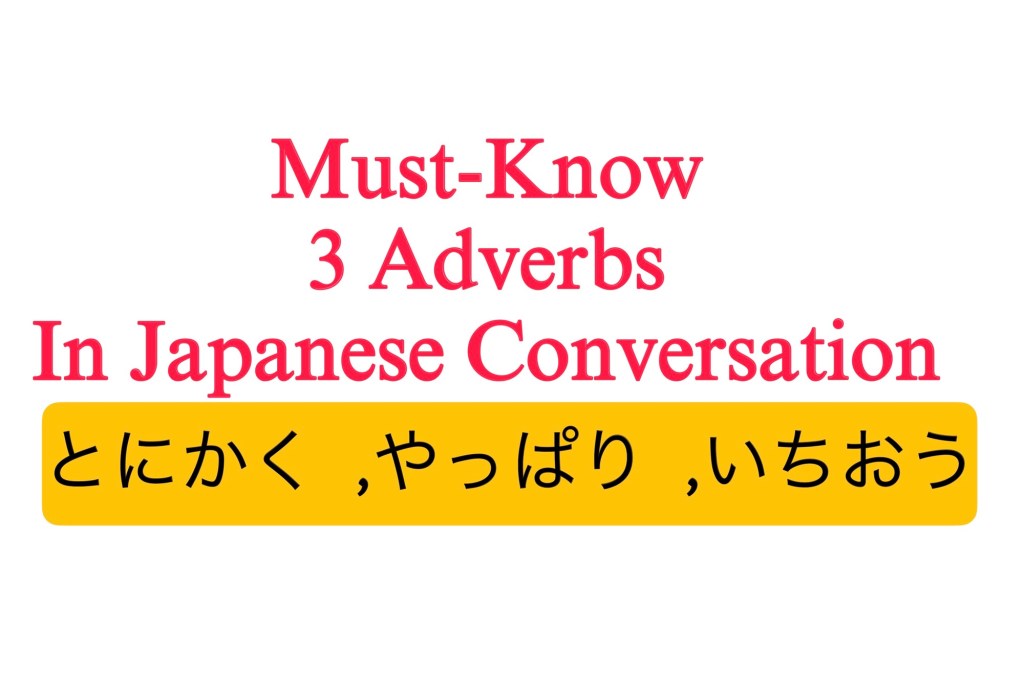
Now you can confidently use「とにかく」「やっぱり」「一応」in real Japanese conversations—try them out and sound more natural! 🌸
Do subscribe and Comment for more update. がんばりましょう。


Leave a Reply