Learning Japanese can be super exciting, especially when you start to understand how the grammar works. If you’re studying for the JLPT N4 (Japanese Language Proficiency Test – Level N4), you’re probably already familiar with the basics and now looking to take things a bit further.
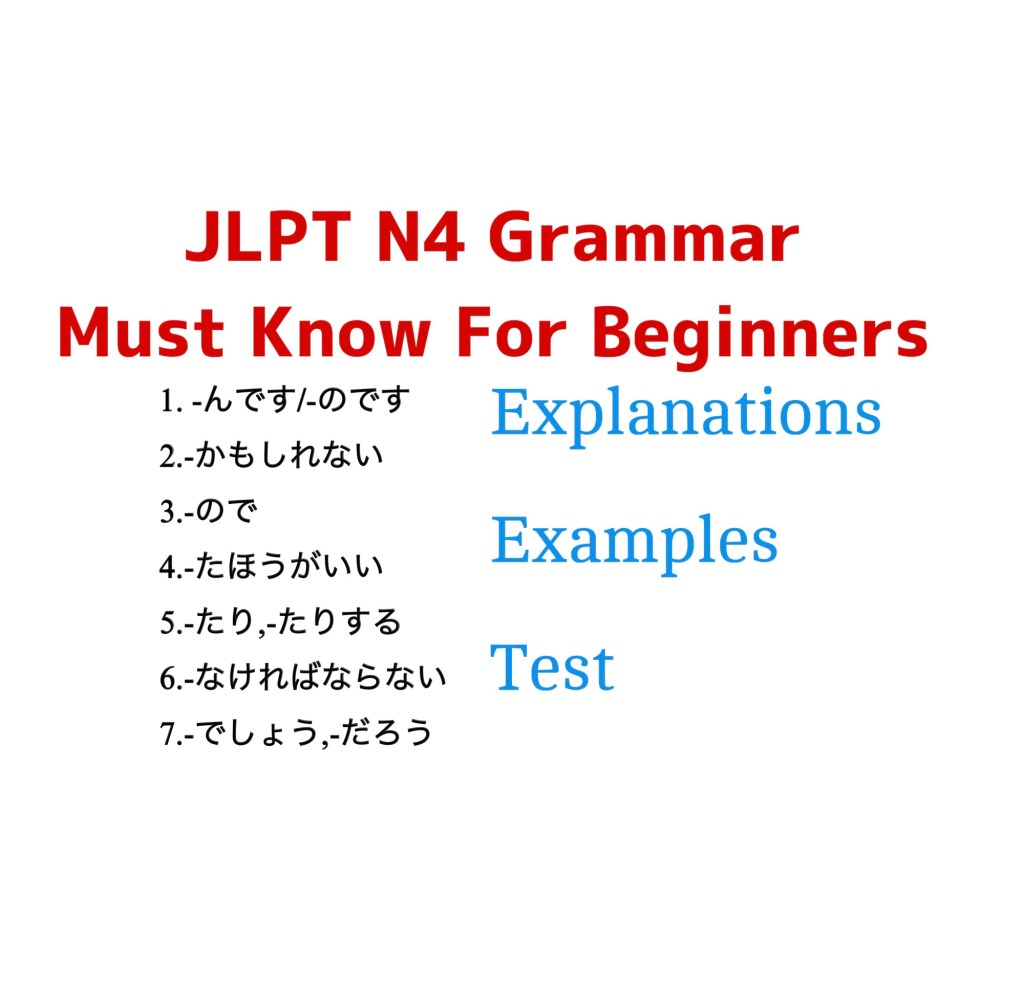
This post is your complete beginner-friendly guide to the most important JLPT N4 grammar points, with clear explanations, easy-to-understand examples, and a practice test at the end to help you solidify what you’ve learned. Whether you’re studying by yourself or taking a class, this guide is for you.
📘 What is JLPT N4?
The JLPT N4 is the second easiest level of the Japanese Language Proficiency Test. It covers about:
- 300 kanji
- 1500 vocabulary words
- Basic conversation and grammar used in everyday life
Let’s get into the essential N4 grammar that will definitely show up on the test (and in real life)!
1. 〜んです / 〜のです (Explaining or Asking for Clarification)
✅ Grammar Form:
- Verb (plain form) + んです
- い-adjective + んです
- な-adjective + な + んです
- Noun + な + んです
📝 Meaning:
Used to explain something or ask for an explanation. It adds emotion or context. Often used in spoken Japanese.
🗣️ Examples:
-どうして遅
れたんですか?
Why were you late?
-お腹
がすいているんです。
I’m hungry.
– 明日
はテストなんです。
I have a test tomorrow.
2. 〜かもしれない (Might / Maybe)
✅ Grammar Form:
- Verb (plain) + かもしれない
- Adjective (plain) + かもしれない
- Noun + かもしれない
📝 Meaning:
Used when you’re not sure, like “maybe” or “might”.
🗣️ Examples:
–明日
–は雨
が降
るかもしれません。
It might rain tomorrow.
–彼
は学生
かもしれない。
He might be a student.
–彼女
はパーティーに来
ないかもしれません。
She might not come to the party.
3. 〜ので (Because / Since)
✅ Grammar Form:
- Verb (plain form) + ので
- い-adjective + ので
- な-adjective + な + ので
- Noun + な + ので
📝 Meaning:
A polite way to say “because.” Similar to から but softer and more formal.
🗣️ Examples:
–雨
が降
っているので、行
きません。
Because it’s raining, I won’t go.
–頭
が痛
いので、早
く帰
ります。
I have a headache, so I’ll go home early.
–疲
れたので、今日
は早
く寝
ます。
I’m tired, so I’m going to go to bed early today.
4. 〜たほうがいい (You should / It’s better to…)
✅ Grammar Form:
- Verb (past form) + ほうがいい
- Verb (negative plain form) + ほうがいい
📝 Meaning:
Giving advice or suggesting something.
🗣️ Examples:
-もっと寝
たほうがいいですよ。
You should sleep more.
–甘
いものは食
べないほうがいいです。
You should avoid sweet things.
-もっと勉強
したほうがいいですよ。
You should study more.
5. 〜たり〜たりする (Do things like… and…)
✅ Grammar Form:
- Verb (た-form) + り、Verb (た-form) + り + する
📝 Meaning:
Used to list a few examples of things you do.
🗣️ Examples:
–週末
は映画
を見
たり、買
い物
をしたりします。
On weekends, I watch movies, go shopping, and so on.
–旅行
で写真
を撮
ったり、美味
しいものを食
べたりしました。
On the trip, I took photos, ate delicious food, and so on.
–週末
は映画
を見
たり、買
い物
をしたりします。
On the weekend, I watch movies, go shopping, and so on.
6. 〜なければならない / 〜なきゃいけない (Have to / Must)
✅ Grammar Form:
- Verb (ない-form) → なければならない
- Verb (ない-form) → なきゃいけない (casual)
📝 Meaning:
You must or have to do something.
🗣️ Examples:
–宿題
をしなければなりません。
I must do homework.
-もう寝
なきゃいけない。
I have to go to bed (casual).
–明日
学校
に行
かなければなりません。
I have to go to school tomorrow.
7. 〜でしょう / 〜だろう (Probably / Right?)
✅ Grammar Form:
- Verb (plain) + でしょう
- Adjective + でしょう
- Noun + でしょう
📝 Meaning:
Used when you guess something or ask for confirmation.
🗣️ Examples:
–明日
は晴
れるでしょう。
It will probably be sunny tomorrow.
–彼
は学生
でしょう?
He’s a student, right?
–明日
は寒
くなるでしょう。
it will cold tomorrow.
🧠 Grammar Tip:
| Grammar | Use | Formality |
|---|---|---|
| 〜から | Because | Normal |
| 〜ので | Because (polite) | More formal |
| 〜でしょう | Probably | Polite |
| 〜だろう | Probably | Casual |
Practice Quiz: Test Your JLPT N4 Grammar
Try to choose the correct answer or fill in the blanks:
Q1: 今日
は雨
が( )ので、かさを持
って行きます。
A. ふる
B. ふっている
C. ふります
Q2:田中
さんは学生( )。
A. かもしれない
B. つもりだ
C. たがる
Q3:寒
いですから、コートを( )ほうがいいです。
A. き
B. きた
C. きる
Q4: 週末
は映画
を見
たり、カフェでお茶
を飲
んだり( )。
A. しました
B. します
C. している
Q5: 明日はテストがあるから、勉強
( )なければなりません。
A. て
B. を
C. なければ
✅ Answers:
- B
- A
- B
- B
- C
How did you do? 3 or more correct means you’re on the right track!
💡 Final Tips for JLPT N4 Grammar Success:
- 📖 Practice reading and listening as much as possible.
- 🧩 Try to use the grammar in your own sentences.
- 💬 Speak aloud! Saying the sentences helps memory.
- 📱 Use apps like Anki, BunPro, or NihongoApp for daily review.
🎌 You’re Closer Than You Think!
Studying Japanese may seem hard, but every grammar point you learn is another building block. Focus on understanding, not just memorizing. With consistent practice and curiosity, you’ll pass JLPT N4—and start using Japanese confidently in real life.
がんばりましょう!💪🇯🇵
Do Comment and Subscribe for more update!


Leave a Reply